

Weesperstraat 107 1018 VN Amsterdam
Full surrender of German fleet to British NAVY at Copenhagen may 10. German cruiser Prinz Eugen in harbor four days after she was shelling Danish Positions
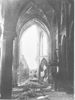
Americans and British link up in Holland. This church in Nijmegen, Holland, was damaged by shelling before the Nazis were driven from the town by the linkup of American airborne troops and soldiers of the Second British Army.
Women watch terrific bombardment of Madrid from across river. Smoke from bombs and shells rising over Madrid in coulds as women watch the terrific bombardment from across the river.
American gun crew loads up for action. The crew of an American anti-aircraft battery loads shells into its gun as it watches on the alert for German planes in the skies above Venafro, Italy, where after stubborn house to house fighting and a furious German counter-attack, forces of the Allied Fifth Army, drove out the enemy and then wiped out German machine-gun nests in caves on the mountainslopes ...
Americans and British link up in Holland. This church in Nijmegen stood in the path of shelling before the Germans were driven from the Dutch town by American airborne troops and soldiers of the Second British Army who joined forces in the town September 20, 1944.
Belgian bomb disposal units. A U.S. Army quartermaster salvage unit picks up a pile of white phosphorus mortar shells recovered in good condition by the Belgian bomb disposal units. They will be shipped to the Pacific theater.
Hotel de l'Europe, Cherbourg, 1944. American troops, some of those who have found their way through the streets of Cherbourg to victory, take a rest in a hotel, one of the buildings that escaped damage from the fierce shelling that preceded their entry into the city.
Church salvage work begins in Normandy. The church of St. Malo of Valogne was destroyed in the aerial bombardment necessary to drive the Nazis from the town. This was one of the few churches in the section damaged by shelling of bombing as Allied artillery men and pilots avoided hitting the structures whenever possible.
Smoke over Cherbourg Peninsula. A huge pall of battle smoke voils the pock-marked Cherbourg Peninsula, evidence of the intense artillery barrage as well as dive-bombing and bombing from medium altitude carried out by B-26 Marauders and fighterbombers of the Ninth U.S. Air Force. In one of the greatest aerial and land bombardments in history June 23, 1944, the Allies unleashed thousands of tons of bombs ...
Duitse vloot: U-Boote. Another U-boat is destroyed. Its conning tower wrecked by shells, another U-boat goes to its doom in the Atlantic. The crew are about to abandon ship.
French leave their homes as battle rages for Cherbourg. Frenchmen piled their belongings into carts and wagons and left their homes in Cherbourg to escape bombs and shells as the Nazis resisted U.S. forces. The Nazis surrendered to the Americans, June 27, 1944, three weeks after the first Allied landings on the Normandy beaches.
Polish war prisoners removing war scars from Westerplatte. Polish soldiers who were taken prisoner after the surrender of the stronghold in Danzig's harbor, the Westerplatte, were put to work to remove debris and repair the damage which was caused by the shelling of this fortified peninsula.